Online Dating Over 50 in Australia (2026): A Practical Guide
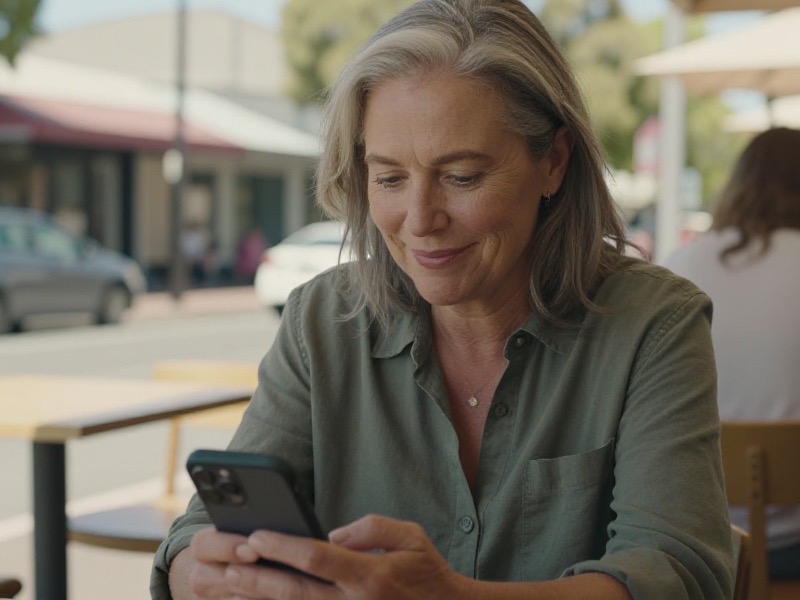
Who is actually dating over 50 in Australia?
A larger and faster-growing group than most people assume. The Australian Bureau of Statistics reports that the median age at divorce now sits in the mid-forties for both men and women, and that separations after twenty or more years of marriage make up a meaningful share of the total (ABS, 2024). That produces a steady flow of Australians re-entering single life in their fifties and sixties, most of them with decades of good health ahead.
Three other forces push the same way. Life expectancy here is among the highest in the world, so a 55-year-old is not winding down, they are planning the next thirty years. Widowhood arrives for many in their sixties. And adult children eventually move out, which is often the moment the house goes quiet and companionship becomes an urgent question rather than a theoretical one.
The technology has caught up too. DataReportal (2026) puts Australian internet use above ninety per cent of the population, with the sharpest recent growth among older adults rather than teenagers, and Pew Research Center (2023) has found dating app use rising in older brackets while it plateaus among the young. The stereotype of online dating as a young person's game is a decade out of date.
What is genuinely different about dating at 50 versus 25?
Almost everything except the nerves. At 25 you are auditioning possible futures. At 55 you already have a life, and the question is whether someone fits into it and you into theirs. That difference reshapes the pace, the honesty and the stakes.
- Priorities are clearer. Most people over 50 know within two dates whether this is worth continuing, because they have a working idea of what they need rather than a vague hope.
- Tolerance for game-playing is gone. Slow replies meant to seem busy, ambiguity kept alive on purpose, three-week silences: this cohort simply stops answering. That is arithmetic about time, not rudeness.
- Finances are real and separate. Property, superannuation, adult children's inheritance expectations and sometimes a divorce settlement are all in the picture from day one.
- Adult children have opinions. Delighted, protective or quietly rattled, particularly if a parent has died or the separation was recent.
- Caring responsibilities are common. Plenty of people here are helping ageing parents and cannot drop everything for a weekend away.
- Many have been out of the market a long time. If your last first date was in 1998, the whole apparatus of profiles and matching is new, and that is a skills gap, not a character flaw.
One thing does not change: almost everybody is nervous before a first date, and those who seem relaxed have just had more practice hiding it.
Which platforms do Australians over 50 actually use?
A mix of long-running Australian sites, mainstream apps with the age filter set high, and messaging-based options. There is no single right answer, and the honest deciding factor is how many active people a platform has within driving distance of your postcode.
- eharmony runs a long questionnaire and is built around relationship intent. It skews older and slower, which suits people who want fewer, better matches.
- RSVP has been an Australian mainstay for years and keeps a solid over-45 membership, particularly outside the capitals. The interface feels dated, which is not always a bad thing.
- Over-50-specific services such as SilverSingles market straight at the cohort. The pitch is comfort and a like-minded pool; the catch is pool size, especially in regional Australia.
- Bumble, Hinge and Tinder are used far more by over-50s than the stereotype suggests, especially in Sydney, Melbourne and Brisbane. Set the age filter and you will often find more genuinely active people than on a niche site.
- Facebook Dating is free and sits inside an app much of this age group already uses daily, which lowers the technical barrier.
- Messaging-based options such as the DateWiz bot on Telegram open a chat only after both people have liked each other, and keep your number private. Familiar interface, no swiping.
Are the over-50 services worth the AUD subscription?
Only if the local pool is genuinely there, and you can check before you pay. Subscriptions on the older-skewing sites commonly run around 30 to 60 dollars AUD a month, and the advertised low rate almost always requires six or twelve months paid upfront. That is real money to spend on a hunch.
Do this instead. Build a free profile, set your search to your actual travel radius, and count how many people were active in the last week. If the answer is eleven, no subscription fixes that. If it is several hundred, the paid tier probably earns its keep, since messaging is usually what sits behind the paywall.
Two consumer points. The ACCC has consistently warned about subscription traps, where signing up takes two minutes and cancelling takes a phone call and a wait (ACCC, 2025), so diarise the renewal date the day you subscribe. And a niche over-50 site with a small membership often serves you worse than a mainstream app with an age filter, because volume beats branding when you are looking for people nearby.
How do you write a profile at 50-plus that sounds confident?
Delete every apology, then describe the life you actually have. The common mistake in this age bracket is not vanity, it is pre-emptive self-deprecation: "new to this", "not sure what to write", "my daughter made me do this", "no time-wasters". Each of those tells a stranger you are uncomfortable before they know anything else about you.
Confidence here is not bravado. It is specificity, delivered without hedging. Compare these:
- Apologetic: "Not really sure what to say here. New to this whole thing. Just looking to see what happens." Confident: "Recently sold the family home and moved back near the coast. Rebuilding a garden that was neglected for a decade and swimming most mornings, badly."
- Apologetic: "Divorced, two grown kids, hoping to meet someone genuine." Confident: "Two adult kids I like enormously and see often. I want someone to travel with in the shoulder seasons and argue with about films."
Say what you want plainly, including the unglamorous parts: whether you want to live together eventually, whether you are open to travel, whether caring commitments shape your week. At this age clarity filters faster than charm, and filtering is the entire job.
What photos work at this age?
Recent, clear and honestly you. A photo from 2014 is not a flattering choice, it is a problem deferred to the first coffee, and anyone who has been on the receiving end recognises that small sinking feeling instantly.
- Nothing older than about eighteen months. If your hair or weight has changed noticeably, the photo is out of date however good it is.
- One clear solo face shot first, in daylight, no sunglasses or hat, looking at the camera.
- No group photos as your main image. If a stranger cannot work out which one is you, they move on rather than guess.
- One full-length shot, which prevents an awkward surprise and signals you are hiding nothing.
- One photo of you doing something you actually do: the bowls club, the vegetable patch, a bushwalk, the caravan. It hands the other person an opening line.
What does the first conversation and first date actually look like?
Short, in public and reasonably soon. A good rule here is to move from messaging to a real meeting within one to two weeks. Long text relationships that never become coffee are the most common way people in this bracket waste six months, and they are also the shape almost every scam takes.
Keep it deliberately small: a coffee or a walk, forty-five minutes, daytime, somewhere busy. Nobody needs a three-hour dinner with a stranger, and a short first date makes a second one easier to say yes to.
The eSafety Commissioner publishes clear guidance for meeting online contacts, and it is worth following exactly (eSafety Commissioner, 2025). Meet in a public place. Tell a friend or an adult child where you are going, who you are meeting and when you expect to be home. Organise your own transport and drive yourself, so leaving is entirely your decision. Keep your address, your workplace and your finances out of the early conversation. None of this is paranoid, and anyone who takes offence has told you something useful.
Why is this age group targeted most by romance scams?
Because the combination scammers want is more common here: accumulated assets, a genuine wish for companionship, and often recent grief or a fresh separation. Scamwatch, run by the ACCC's National Anti-Scam Centre, reports Australians losing tens of millions of dollars to romance scams each year, with the highest losses concentrated in the older age bands even though younger people report more incidents (ACCC, 2025). Older Australians lose more per person, and that gap is the story.
Three patterns account for most of it.
- The partner who is never available. Working offshore, deployed overseas, a surgeon on contract abroad. Warm daily messages, endless reasons video calling cannot happen, and a meeting always six weeks away.
- The investment pivot. The romance runs warmly for weeks, then comes a casual mention of a trading platform or crypto opportunity they have done well from. This is the costliest version by a wide margin, and it often starts with a small amount that pays out to build trust.
- The emergency. A medical bill, a customs fee, a stranded child. Always urgent, always solvable with a transfer, and never the last request.
The protocol is simple. Insist on a live video call in the first week and ask them to do something spontaneous on camera. Reverse image search their photos. Never send money, gift cards or cryptocurrency to someone you have not met, and never receive and forward funds for anyone, since that can make you a money mule in your bank's eyes. Report anything suspicious to Scamwatch, and tell one friend what is going on, because isolation is what every scam depends on.
When should you introduce someone to your adult children?
When the relationship is stable enough to be worth their emotional investment, which for most families means at least three months of consistency. A series of new introductions is harder on adult children than people expect, especially if their other parent has died or the separation is recent.
Tell them beforehand rather than staging a surprise. Choose neutral ground and keep it short, a coffee or a lunch, not a family Christmas. Expect protectiveness, which is usually about money or a surviving parent's memory rather than about your happiness. And be clear on one point: you are informing them, not seeking permission.
The financial boundaries conversation
Have it early, and keep your money separate for far longer than feels romantic. Nobody who genuinely cares about you needs access to your accounts, your superannuation or your property in the first year. If things become serious enough to consider living together, get independent legal advice about wills, binding financial agreements and what happens to your home before anyone moves anything in. A partner offended by that is a partner you have learnt something important about, cheaply.
What if the technology itself is the barrier?
Start with the app you already use daily, then add one new thing at a time. Plenty of Australians over 50 message their grandchildren every day but find swipe-based apps alienating, which is a reasonable reaction to an interface built for people with different habits.
Three practical steps. First, learn where the block and report buttons live before anything else, on every platform you join. Second, ask an adult child or a friend to help with the photos and the mechanics, not the writing, because a profile written by your daughter sounds like your daughter. Third, Be Connected, the free digital skills program supported by the eSafety Commissioner, runs online courses and in-person sessions through libraries and community centres nationwide.
If swiping is the part that puts you off, a messaging-based option removes it. The DateWiz bot on Telegram works inside an app many people over 50 already use for family chat, opens a conversation only once both people have said yes, and keeps your number hidden until you decide otherwise. No swipe deck and no subscription removes two of the three usual objections at once.
The bottom line
Dating over 50 in Australia is not a consolation version of dating at 25. It is a better-informed one, with clearer priorities, less patience for nonsense and a far shorter path from meeting someone to knowing whether it works. Statista (2025) counts millions of Australians using dating services, and a growing share are in exactly your age bracket.
Get the basics right and the rest follows: recent photos, a profile without apologies, a short public first date you drive yourself to, money kept separate, and a firm rule that anyone who cannot video call does not get your time. Whether you start on a mainstream app, a long-running Australian site or a free Telegram-based option, the goal is the same: fewer, better conversations with people who live near enough to actually meet.